 |
 |
|
| Explora
Patagonia - Chile CallCenter USA Office |
 Articles & News Articles & News |
| |
| "EXPLORA PATAGONIA EVERY MONTH AND UNIQUE OPPORTUNITY" |
| |
 Most people believe that the weather in Torres del Paine National Park (51º07’S) is inhospitable from the months of May through September. This misconception sometimes leads travelers and travel consultants to advise against traveling to Chilean Patagonia during autumn and winter months in the southern hemisphere. Most people believe that the weather in Torres del Paine National Park (51º07’S) is inhospitable from the months of May through September. This misconception sometimes leads travelers and travel consultants to advise against traveling to Chilean Patagonia during autumn and winter months in the southern hemisphere.
The reality in fact, is much different; with astonishing landscapes filled with a wide spectrum of colors, nature at its fullest and the serenity to explore at will, Patagonia is the ultimate all year round destination. As you move from the Chilean west coast of South America towards the east coast of Argentina, the weather grows increasingly drier as the landscape changes to a typical Patagonian steppe.
Torres del Paine is over one hundred and fifty miles from the coast, halfway between the Pacific and the Atlantic, and therefore the area benefits from low rainfall throughout the year.
The park has a microclimate generating pleasant temperatures in both winter and summer. During the rainy months, precipitation rarely measures more than 80 mm
(3,1 inches). |
|
|
|
|
 |
| May & June |
July & August |
September |
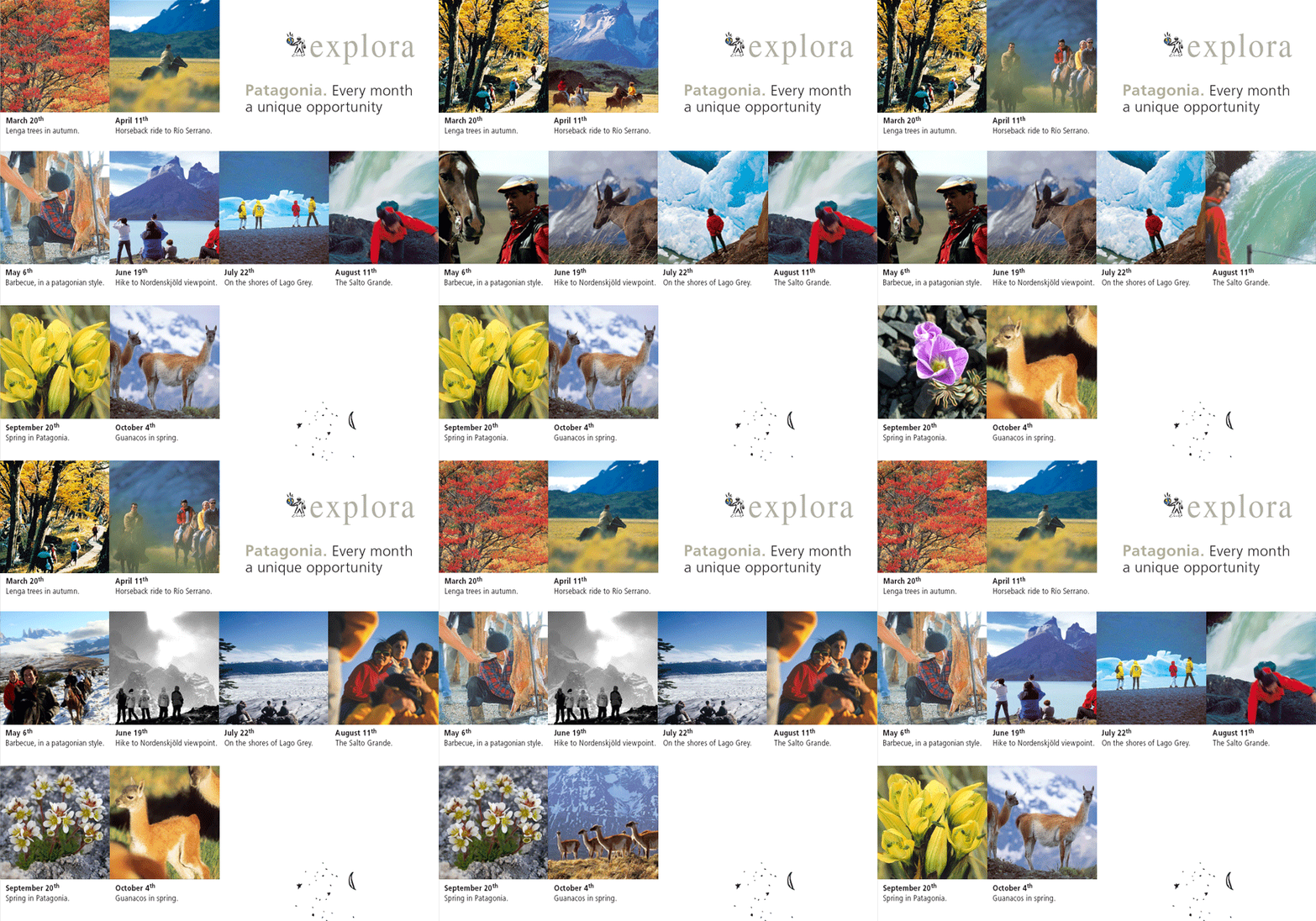
With light winds during the autumn months, the park displays stunning red, orange, and yellow hues offering the perfect light for photography in addition to the likelihood of catching flora and fauna at its best. Winds are mainly westerly and and blow mostly towards the end of spring and beginning of summer (September thru January). There is almost no wind during winter and, with the exception if a few seasonal storms, the fall is plenty of bright and
sunny days. |
Winter offers you sunny days with overwhelming vistas of snowcovered landscapes. Most of the snow falls in higher elevations of the park, whereas in the lake areas, it only falls during a few weeks of the year. With a smaller number of visitors on trails, your chances of viewing large herds of animals are increased. Changes in weather are unppredictable as the opportunities to encounter the unexpected.
|
Longer beautiful days, flowers in full boom and an abundance of birds signal the beginning of spring. This is an ideal time for bird watching and nature exploration. Guanacos, Foxes, armadillos, and the occasional puma: Lenga and coigue forests, flowers and several bush species create an interesting mix
of vegetation. |
 |
 |
 |
| Full day exploration including 5 hours riding. Leaving explora by van by van (15 min) to the stable. Narrow trails through forest, along lakes and across prairie land. View of Donoso Mountain, in one of the least-explored, virgin areas of the park. Picnic lunch next to Los Choros Lake. Prairie, streams, mountains and exuberant flora are a few of the highlights of this horseback ride. |
Half day exploration walking 2.5 hours. Leaving explora by van (10 min) toward the Pudeto Refugio. Walk to the shore of Lake Pehoé, first passing the Salto Grande waterfall, then toward the Paine Massif until reaching the vista point of Lake Nordenskjöld. Spectacular view of the French Valley, the Paine Grande Massif and the Horns. |
Half day exploration, leaving explora by van to the quincho barbecue site. This excursion has an emphasis on photography and learning the flora and fauna of the park. During the journey it is possible to observe a numerous varieties of fauna such as guanacos, rheas, condors, foxes, skunks, ducks, geese and other varieties of birds, especially during the spring. Views of the Horns and the Towers, the Almirante Peak and the Paine River Cascade. |
|
| |
|
|
|


